Data Structures & Algorithm Optimization: Solving Complex Problems Cleanly
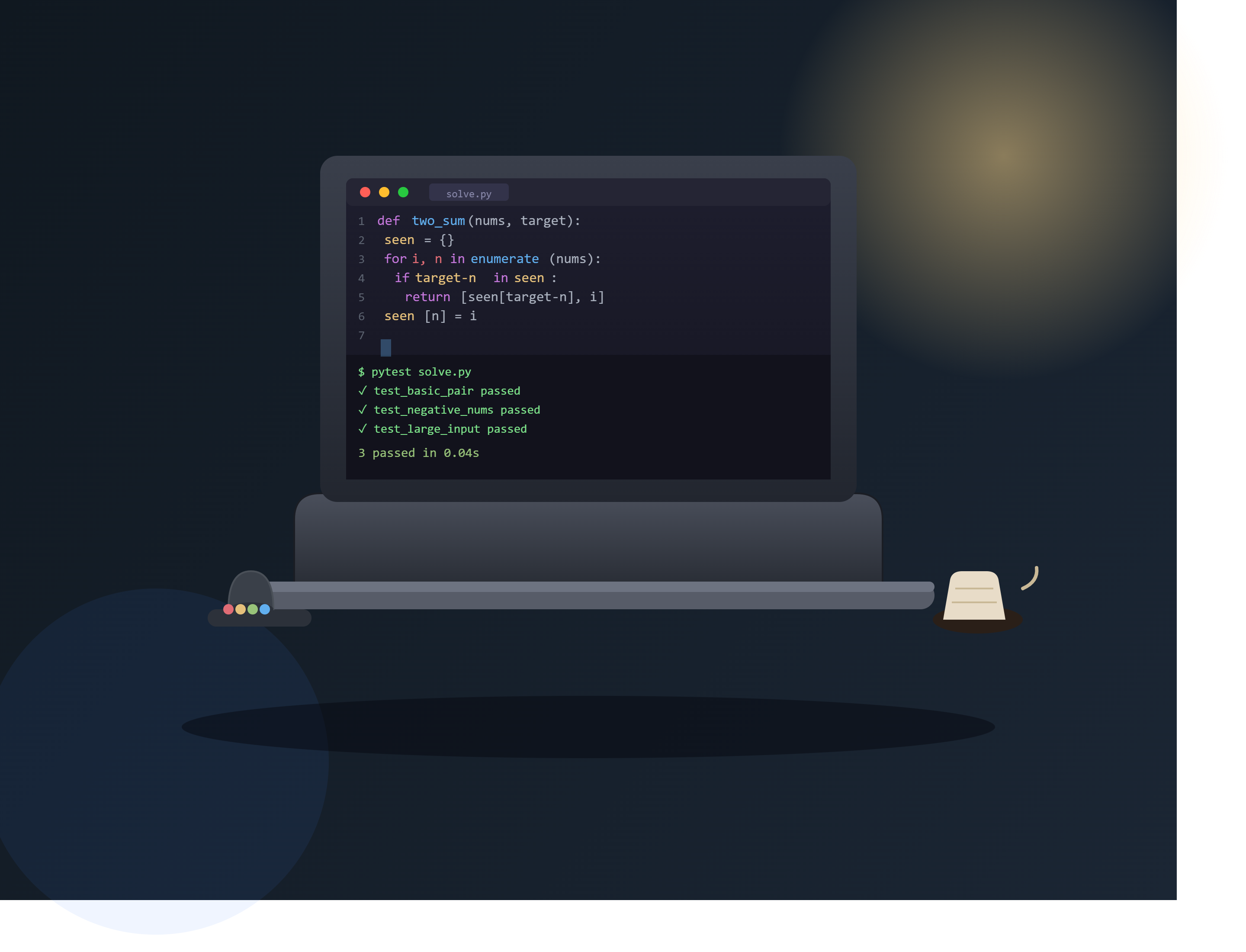
“Writing working code is easy; writing memory-efficient, fast, and scalable logic requires strong algorithmic thinking and dynamic problem-solving.”
1. Understanding Time vs. Space Complexity
Before writing a single line of production logic, analyzing Big-O notation is essential. A simple function processing 100 items will work smoothly with nested loops, but processing 1,000,000 items with O(N^2) complexity will choke the application thread.
2. Refactoring O(N^2) Loops to O(N) Hash Lookups
Let's compare a naive nested loop pattern against a space-efficient Hash Map solution when looking for complementary pairs.
// Naive Approach: O(N^2) Time Complexity using nested loops
function findPairsNaive(arr: number[], target: number) {
  const pairs = [];
  for (let i = 0; i < arr.length; i++) {
    for (let j = i + 1; j < arr.length; j++) {
      if (arr[i] + arr[j] === target) {
        pairs.push([arr[i], arr[j]]);
      }
    }
  }
  return pairs;
}// Optimized Approach: O(N) Time Complexity using Hash Map (Set)
function findPairsOptimized(arr: number[], target: number) {
const seen = new Set<number>();
const pairs = [];
for (const num of arr) {
const complement = target - num;
if (seen.has(complement)) {
pairs.push([complement, num]);
}
seen.add(num);
}
return pairs;
}3. Memory Tuning & Resource Optimization
Optimizing logic isn't just about execution speed—managing garbage collection, preventing memory leaks, and keeping heap memory light is crucial whether running backends or embedded IoT nodes.
Prefer in-place array transformations when memory overhead is strict.
Use two-pointer and sliding window patterns for sub-array calculations.
Clear unused memory buffers and dereference heavy structures proactively.
Written by Kawsar Ahmed
Software Engineer specializing in Data Structures, Problem Solving, and Algorithmic Performance Tuning.